Pomeranian Puppy Weight Calculator
Use this Pomeranian puppy weight calculator to find out how big your Pomeranian puppy will get. Just type your puppy's age and weight below and this tool will calculate the future adult size of your puppy.
Puppy Weight Calculator
Predict your puppy's adult weight
Results
- Predictions are estimates based on breed standards
- Individual dogs may vary based on genetics and nutrition
- Consult your vet for personalized assessments
Pomeranian Stats
Pomeranian Growth Chart
Pomeranian Traits

Blue Buffalo Life Dry Dog Food with DHA and ARA
- Made with Natural Ingredients, Chicken & Brown Rice Recipe.
- Contains no chicken or poultry by-products, corn, wheat or soy.
- Contains precise blend of antioxidants, vitamins and minerals.
- Rated 4.7 of 17.8K reviews.
Patellar luxation, or loose kneecaps, is very common in this breed and can appear as early as four months of age. Collapsing trachea, which causes a honking cough, is also frequently seen in Pomeranians. Additionally, the breed is prone to a condition called black skin disease, or alopecia X, which causes progressive hair loss. For your Pomeranian puppy, it is very important to ask the breeder for health clearances on the knees.
Ensure that their meal include small kibble pieces and a concentrated calorie profile to meet their high metabolic rate. Feed three to four small meals per day from weaning until four months of age, then reduce to two to three meals per day. Pomeranian puppies are at significant risk for hypoglycaemia, or low blood sugar, because they have very small bodies and limited fat stores. If your puppy becomes lethargic, weak, or begins trembling, you should offer a small amount of honey or sugar water immediately and then contact your veterinarian.
Their coat is double-layered, consisting of a very soft, dense undercoat and a long, straight, harsh outer coat. This breed is a profuse shedder, and without regular brushing, the undercoat can become matted and trap moisture against the skin. Brushing is required every two to three days using a pin brush and a slicker brush, followed by a metal comb to check for tangles. Start grooming sessions early so your puppy learns to stand calmly. Puppies lose their soft baby coat between four and six months of age, during which time they may look scruffy and shed heavily. This is normal. Bathing is recommended every three to four weeks using a high-quality dog shampoo and conditioner.
This breed is highly intelligent, curious, and eager to learn, but they can also develop a stubborn and demanding personality if not properly guided. Short, positive training sessions of five to seven minutes work best because their attention span is naturally limited. Use very small, soft treats and cheerful praise. Housetraining can be quite challenging with Pomeranian puppies, as they have very small bladders and may need to go outside as often as every two hours in the early weeks. Crate training and the consistent use of puppy pads are strongly recommended. Socialisation is absolutely essential. Introduce your puppy gently to a wide variety of people, trustworthy children, and other small, calm dogs before they reach four months of age. Without proper socialisation and consistent boundaries, a Pomeranian puppy may develop small dog syndrome, which includes excessive barking, possessiveness, and fearfulness.
About the Pomeranian
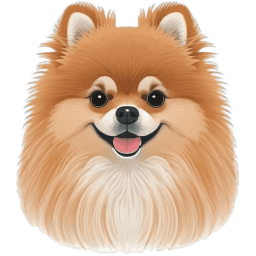
The Pomeranian is a very small, fluffy, and lively breed that originated in the region of Pomerania, which is an area of northern Europe along the Baltic Sea coast, now part of Germany and Poland. Historically, the breed’s ancestors were much larger Spitz-type sled dogs. It was only through selective breeding in England, particularly under Queen Victoria’s influence in the late nineteenth century, that the Pomeranian was reduced to its current toy size. In terms of size category, the Pomeranian falls into the toy range. An adult typically stands between 6 and 7 inches at the shoulder and weighs between 3 and 7 pounds. As a puppy, they are exceptionally tiny at birth, often weighing less than three ounces. They grow slowly compared to larger breeds and may not reach their full adult size until they are twelve to fifteen months of age.
References