Use this Bull Terrier puppy weight calculator to predict how big your puppy will get. Bull Terriers are a terrier breed that typically reaches full size by around 12-15 months.
Enter your puppy's current weight and age to predict their adult size
Estimates based on breed growth curves. Individual dogs vary with genetics and nutrition — check with your vet for a personalized read.
A practical pick for medium-sized breeds.
As an Amazon Associate we earn from qualifying purchases, at no extra cost to you.
| Age | Weight |
|---|---|
| Birth | 1 to 2 lbs |
| 2 Months | 8 to 14 lbs |
| 3 Months | 13 to 21 lbs |
| 4 Months | 18 to 28 lbs |
| 5 Months | 23 to 35 lbs |
| 6 Months | 28 to 42 lbs |
| 7 Months | 33 to 49 lbs |
| 9 Months | 38 to 56 lbs |
| 10 Months | 43 to 63 lbs |
| 1 Year | 48 to 69 lbs |
| 1.5 Years | 50 to 70 lbs |
| 2 Years | 50 to 70 lbs |
Estimated from typical medium-breed growth curves and the Bull Terrier's adult weight range. Individual puppies vary — use the calculator above for a prediction based on your puppy's actual current weight.
New breed data, growth tips, and puppy-parenting insights, plus our free printable puppy growth tracker.
White Bull Terriers (and other breeds carrying merle, piebald, or extreme white piebald genes) have an elevated rate of hereditary deafness — about 10-20% of white Bull Terriers are born deaf in one or both ears, and a BAER hearing test at 6-8 weeks can screen for it. The breed is also predisposed to hereditary nephritis, a genetic kidney disease that can progress silently until it's advanced, so periodic kidney function bloodwork is worth discussing with a vet.
A quality diet in measured portions; no specific dietary requirements beyond standard weight management.
The short, dense coat needs minimal brushing — a low-maintenance coat overall.
Bull Terriers are intelligent but can be stubborn and strong-willed — consistent, engaging training works better than repetition, and this breed does best with an owner ready to keep training interesting.
The Bull Terrier was developed in mid-19th-century England by James Hinks, who crossed bull-and-terrier fighting dogs with the now-extinct English White Terrier to create a more refined breed with the distinctive "egg-shaped" head that defines the breed today. The Bull Terrier Club of America formed in the 1890s.
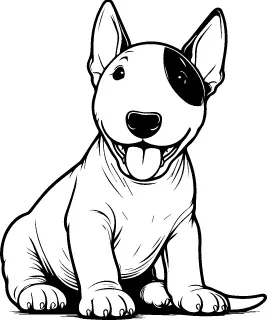
Known for a bold, mischievous, playful temperament, Bull Terriers are also one of very few breeds with triangular eyes, a defining physical trait alongside the sloped, egg-shaped profile.
