Use this Dachshund puppy weight calculator to predict how big your puppy will get. Dachshunds are a small hound breed that usually reaches full size by about 12 months.
Enter your puppy's current weight and age to predict their adult size
Estimates based on breed growth curves. Individual dogs vary with genetics and nutrition — check with your vet for a personalized read.
Indoor/outdoor enclosure — a good fit for toy and small breeds.
As an Amazon Associate we earn from qualifying purchases, at no extra cost to you.
| Age | Weight |
|---|---|
| Birth | 0.2 to 1 lbs |
| 2 Months | 3 to 10 lbs |
| 3 Months | 4 to 13 lbs |
| 4 Months | 5 to 16 lbs |
| 5 Months | 6 to 19 lbs |
| 6 Months | 7 to 22 lbs |
| 7 Months | 8 to 26 lbs |
| 9 Months | 9 to 29 lbs |
| 10 Months | 10 to 31 lbs |
| 1 Year | 11 to 32 lbs |
| 1.5 Years | 11 to 32 lbs |
| 2 Years | 11 to 32 lbs |
Estimated from typical toy-breed growth curves and the Dachshund's adult weight range. Individual puppies vary — use the calculator above for a prediction based on your puppy's actual current weight.
New breed data, growth tips, and puppy-parenting insights, plus our free printable puppy growth tracker.
The Dachshund's long spine and short legs come from a genetic trait called chondrodystrophy, which causes the discs between vertebrae to harden prematurely — sometimes by age one. This makes intervertebral disc disease (IVDD) the breed's defining health risk: roughly 1 in 4 Dachshunds will experience an IVDD episode, most often between ages three and seven, and it can cause sudden pain, wobbliness, or paralysis if a disc ruptures. Any sudden change in how your Dachshund moves warrants an immediate vet visit, not a wait-and-see approach.
Keeping a Dachshund lean is one of the most effective things an owner can do for spinal health — losing even a pound or two measurably reduces pressure on the discs in a dog this size. Avoid overfeeding and resist a Dachshund's famously persuasive begging.
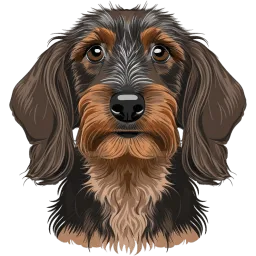
Grooming depends on coat type: smooth coats need just weekly wiping, long-haired coats need regular brushing to prevent matting, and wirehaired coats benefit from hand-stripping a couple of times a year. All types shed lightly to moderately.
Ramps or steps to prevent jumping on and off furniture, and avoiding repeated high-impact landings, protect the spine day to day. Dachshunds are intelligent but independent-minded, bred to work at a distance from hunters, so training benefits from patience and consistency more than raw obedience drilling.
The Dachshund — German for "badger dog" — was developed in 15th-century Germany to track and hunt badgers into their burrows, with the short legs and long, narrow body giving it the build to go underground after prey. Early Dachshunds were larger and sturdier, sometimes working in packs to take down game as large as wild boar; today's breed comes in two sizes (standard and miniature) and three coat types (smooth, long-haired, and wirehaired).
Bold, vivacious, and famously stubborn, Dachshunds retain much of their hunting-dog independence and courage despite their small size, which shapes both their charm and their training challenges as companion dogs.
