Jack Russell Terrier Puppy Weight Calculator
Use this Jack Russell Terrier puppy weight calculator to find out how big your Jack Russell Terrier puppy will get. Just type your puppy's age and weight below and this tool will calculate the future adult size of your puppy.
Puppy Weight Calculator
Predict your puppy's adult weight
Results
- Predictions are estimates based on breed standards
- Individual dogs may vary based on genetics and nutrition
- Consult your vet for personalized assessments
Jack Russell Terrier Stats
Jack Russell Terrier Growth Chart
Jack Russell Terrier Traits

Blue Buffalo Life Dry Dog Food with DHA and ARA
- Made with Natural Ingredients, Chicken & Brown Rice Recipe.
- Contains no chicken or poultry by-products, corn, wheat or soy.
- Contains precise blend of antioxidants, vitamins and minerals.
- Rated 4.7 of 17.8K reviews.
Patellar luxation, where the kneecap slips temporarily out of place, occurs frequently in the breed. Lens luxation, a dislocation of the lens of the eye, is also a known concern and can lead to glaucoma and blindness if untreated.
Cataracts, which cause opacity of the lens, may also occur. While the Russell Terrier itself has not been extensively studied for genetic epilepsy, the closely related Parson Russell Terrier carries a known mutation in the PITRM1 gene causing severe early-onset seizures between 6 and 12 weeks of age, so you should ask your breeder about genetic testing.
The Russell Terrier puppy has an intense yet short growth period combined with a lively temperament, so the food should provide adapted levels of energy, protein, calcium, and phosphorus to support harmonious growth.
Give three to four small meals per day until six months of age to prevent low blood sugar, then reduce to two meals daily.
Measure portions carefully, as this breed can become overweight if overfed, which worsens joint problems.
Although they require weekly brushing to control shedding, especially in the spring and fall, Russell Terriers are generally low-maintenance dogs.
The smooth coat requires minimal upkeep, while broken and rough coats benefit from occasional hand stripping to maintain texture.
Rough-coated Russells need to be hand-stripped a few times a year to preserve coat texture instead of just clipping, but smooth-coated Russells only need to be brushed.
Begin training and socialization as soon as you bring your puppy home. Use positive reinforcement methods with small, tasty treats, praise, and play, as this breed does not respond well to harsh corrections. Keep training sessions short, typically 5 to 10 minutes, and vary the activities to hold their attention.
House training may require patience; establish a consistent schedule and use crate training for best results.
About the Jack Russell Terrier
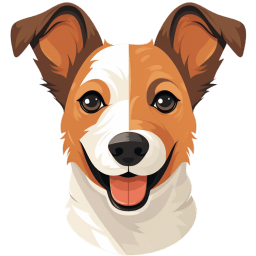
The Jack Russell Terrier is a small, energetic, and intelligent breed that originated in England . The breed was developed approximately 200 years ago by Reverend John Russell, a clergyman and avid fox hunter, who wanted to create a terrier that was low enough to the ground to flush foxes from their dens yet fast enough to keep up with horses . In terms of size category, the Jack Russell Terrier falls into the small range. Adults typically stand 10 to 12 inches at the shoulder and weigh between 9 to 15 pounds) . As a puppy, Jack Russells have an intense but short growth period . They are born very small and grow steadily, generally reaching their full adult size by approximately ten months of age. It is worth noting that there are several related breeds: the Jack Russell Terrier, the Parson Russell Terrier, and the Russell Terrier, with the Jack Russell being the only one not currently recognised by the American Kennel Club
References